
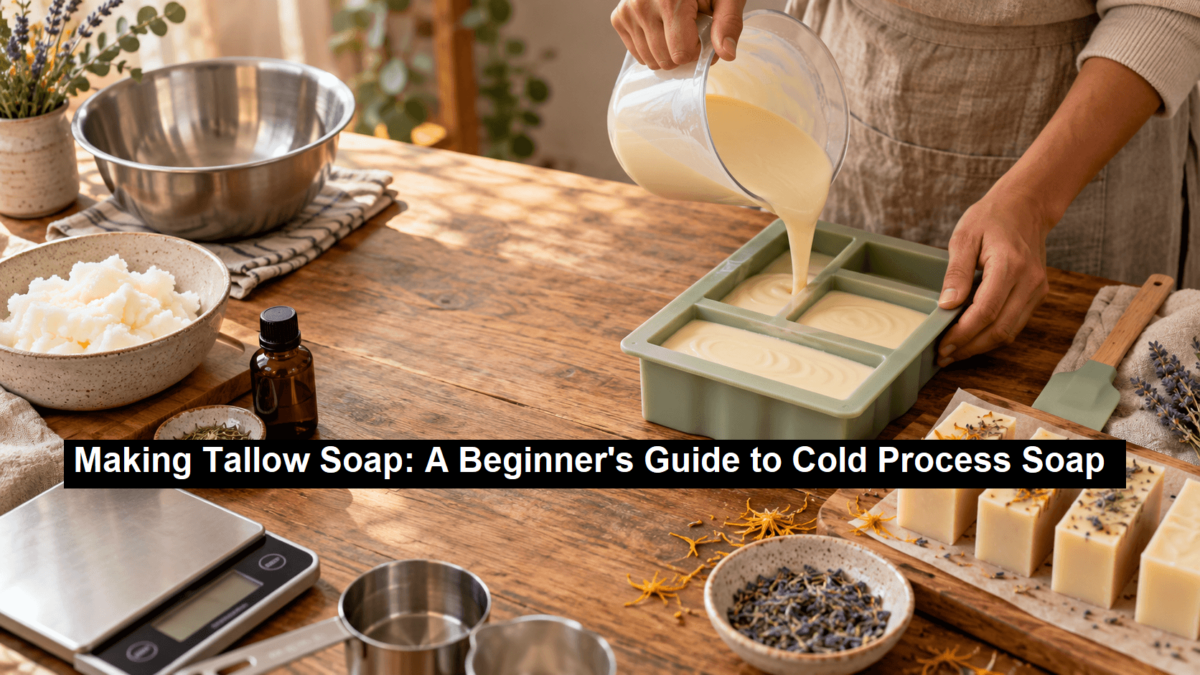
Have you ever considered making your own soap but felt overwhelmed by the ingredients, equipment and unfamiliar techniques? You’re not alone. Cold process soapmaking can seem complicated, particularly when you encounter terms such as lye, saponification and trace for the first time.
The good news is that making Tallow Soap becomes easier to understand once you learn the basic chemistry and follow a reliable recipe. Beef Tallow has been used in traditional soapmaking for generations, valued for producing firm, long-lasting bars with a creamy lather.
Whether you’re interested in traditional skincare ingredients or simply want to explore a new craft, this beginner-friendly guide covers the materials, safety precautions and essential steps involved in making cold process Tallow Soap.
Table of Contents
- What Is Tallow Soap and Why Make It?
- Essential Ingredients for Making Tallow Soap.
- Equipment and Safety Precautions.
- How to Make Cold Process Tallow Soap.
- Common Soapmaking Mistakes to Avoid.
- How to Cure and Store Homemade Tallow Soap.
- Start Your Soapmaking Journey With Confidence.
What Is Tallow Soap and Why Make It?
Tallow Soap is a traditional soap made using rendered animal fat, typically Beef Tallow. Rendering involves heating fat to separate it from moisture and other materials, producing an ingredient suitable for various applications.
During cold process soapmaking, tallow reacts with sodium hydroxide, commonly called lye, through a chemical process known as saponification. This reaction transforms fats into soap and glycerine.
Unlike melt-and-pour soapmaking, cold processing allows you to formulate your soap from individual fats and oils.
Why use Beef Tallow in soap?
Beef Tallow contains fatty acids that contribute to the physical properties of finished soap.
Some characteristics include:
- Firmness: Tallow helps create harder bars that generally last longer when stored and used correctly.
- Creamy lather: It contributes to a dense, stable lather rather than large, airy bubbles.
- Formulation versatility: It can be combined with other oils to adjust the finished bar’s properties.
- Traditional appeal: It provides an opportunity to explore established soapmaking methods using animal-derived ingredients.
However, Tallow Soap is not automatically suitable for every skin type. The finished soap’s characteristics depend on the complete formulation, manufacturing process and proper curing.
Essential Ingredients for Making Tallow Soap
Before making your first batch, it’s important to understand what each ingredient contributes.
1. Beef Tallow
Tallow is the main fat in this type of soap. For consistent results, look for properly rendered, filtered Beef Tallow intended for cosmetic applications.
If you’re sourcing raw materials, you can buy beef tallow for skincare from AWO as one example of cosmetic-grade tallow suitable for soap formulations. Check the supplier’s specifications, origin and recommended usage before selecting an ingredient.
Refined tallow generally has a milder smell and more consistent appearance than minimally processed versions, although characteristics can vary.
2. Sodium hydroxide (lye)
Sodium hydroxide is essential for traditional cold process bar soap.
It reacts with fats and oils to produce soap through saponification. Because sodium hydroxide is highly caustic, it must be handled carefully using appropriate protective equipment.
Never substitute baking soda or another household ingredient for sodium hydroxide in a cold process soap recipe.
3. Distilled water
Distilled water is used to dissolve sodium hydroxide and prepare the lye solution.
Using distilled water helps reduce variability caused by minerals or other substances that may be present in tap water.
4. Additional oils
Although tallow can be the main ingredient, combining it with other oils can help create a more balanced bar.
For example, Olive Oil contributes to a gentler-feeling formulation, while Coconut Oil can increase cleansing ability and bubbly lather.
If you’re also exploring natural body care beyond soapmaking, organic jojoba oil is an example of Jojoba Oil that can be used separately as a body oil or incorporated into suitable cosmetic formulations. It isn’t essential for beginner Tallow Soap, and adding it to a soap recipe would require recalculating the lye amount.
How different oils affect soap
| Ingredient | Main Contribution | Consideration |
| Beef Tallow | Hardness and creamy lather. | Suitable as a primary soapmaking fat. |
| Olive Oil | Conditioning qualities and mild lather. | High percentages may need longer curing. |
| Coconut Oil | Cleansing ability and bubbly lather. | Excessive amounts may feel drying. |
| Castor Oil | Helps support and stabilise lather. | Commonly used in small percentages. |
| Jojoba Oil | Adds liquid wax esters to a formulation. | Optional and not necessary for beginner soap. |
The amounts matter just as much as the ingredients. Every oil has a different saponification value, meaning the quantity of sodium hydroxide required will change depending on your recipe.
Read: How To Dress Better While Spending Less
Equipment and Safety Precautions
You don’t need professional manufacturing equipment to begin soapmaking, but you do need suitable tools and a safe workspace.
Essential equipment
Prepare the following items before starting:
- Digital scales accurate enough for soapmaking measurements.
- Heat-resistant, lye-compatible containers.
- Stainless steel utensils.
- An immersion or stick blender.
- A suitable soap mould.
- A thermometer.
- Protective chemical splash goggles and gloves.
- Long sleeves and protective clothing.
Avoid aluminium equipment because sodium hydroxide reacts with aluminium.
Important lye safety rules
According to the US Centers for Disease Control and Prevention, sodium hydroxide can cause serious burns to the skin and eyes.
Always follow these precautions:
- Wear protective goggles, suitable gloves and protective clothing throughout the process.
- Work in a well-ventilated area, away from children and pets.
- Always add sodium hydroxide slowly to water, never water to sodium hydroxide.
- Use containers specifically suitable for caustic solutions and the heat generated during mixing.
- Measure ingredients by weight, not volume.
- Follow a verified recipe and never guess lye quantities.
If sodium hydroxide contacts your skin or eyes, immediately rinse with plenty of running water and seek urgent medical advice. Do not attempt to neutralise it with vinegar or another chemical.
For complete beginners uncomfortable with handling lye, melt-and-pour soapmaking offers a simpler alternative using an already manufactured soap base.
How to Make Cold Process Tallow Soap
Once you understand the safety requirements, you can begin preparing your first batch.
The following steps explain the general cold process method. Use them alongside a tested, complete soap recipe with exact weights for every ingredient.
Step 1: Choose and calculate your recipe
Start with a straightforward recipe featuring Beef Tallow and a small selection of complementary oils.
For example, a soap formula might contain tallow alongside Olive Oil, Coconut Oil and a small proportion of Castor Oil.
Before mixing anything, use a dedicated SoapCalc soapmaking calculator to calculate the required sodium hydroxide and water quantities based on the exact oils, their weights and your chosen superfat level.
Superfat refers to the calculated percentage of oils left beyond the amount needed for complete saponification. Beginners often use a modest superfat level, such as 5%, but should follow their verified recipe.
An ingredient list without calculated lye and water weights is not a complete soap recipe.
Step 2: Prepare your workspace
Clean and organise your equipment. Place everything on a stable, protected surface with sufficient ventilation.
Put on your protective equipment before handling sodium hydroxide.
Check that your mould is ready and that your recipe measurements are written down.
Step 3: Prepare the lye solution
Following your verified recipe, weigh the distilled water and sodium hydroxide separately.
Slowly add the sodium hydroxide to the water while stirring carefully.
The solution will heat up considerably as the lye dissolves. Allow it to cool to the temperature range specified in your recipe.
Never inhale the vapour or lean directly over the container.
Step 4: Melt and prepare the tallow
Gently heat the weighed Beef Tallow until it becomes fully liquid.
If your recipe includes other solid fats, melt them as directed. Combine the prepared oils and allow them to reach the recommended mixing temperature.
Avoid overheating your ingredients.
Step 5: Combine and blend
Carefully add the prepared lye solution to the oils, following your recipe’s directions.
Use an immersion blender in short bursts, alternating with gentle stirring.
As the mixture begins to emulsify, it will gradually thicken. Soapmakers call this stage trace.
At light trace, the soap mixture resembles a thin custard. A small drizzle may briefly leave a visible trail on the surface.
Avoid excessive blending, which can make the mixture too thick to pour.
Step 6: Pour into the mould
Once the mixture reaches the appropriate consistency, pour it carefully into your prepared soap mould.
Gently tap the mould to release trapped air bubbles.
Keep it somewhere secure and follow the recipe’s insulation and temperature instructions. Fresh soap batter is still caustic and should not be touched without protection.
Step 7: Unmould and cut
Many cold process soaps become firm enough to unmould within approximately 24–48 hours, although the time varies.
If the soap remains too soft, allow additional time.
Once sufficiently firm, remove it from the mould and cut it into bars using suitable protective equipment.
The bars must still cure before regular use.
Common Soapmaking Mistakes to Avoid
Your first batch might not look perfect, and that’s part of learning.
Understanding common mistakes can help you identify problems before they affect your finished soap.
| Common Mistake | Possible Result | How to Avoid It |
| Incorrect lye measurements | Soap may contain excess caustic alkali. | Use accurate scales and a verified formula. |
| Too much blending | Batter becomes too thick to pour. | Blend in short bursts and monitor trace. |
| Inaccurate temperatures | Unpredictable thickening or texture. | Follow your recipe’s temperature guidance. |
| Too many additives | Unpredictable reactions or consistency. | Keep your first recipe simple. |
| Insufficient curing | Bars may remain soft or dissolve quickly. | Allow the recommended curing period. |
The Bramble Berry beginner’s guide to cold process soap provides further explanations of common soapmaking concepts, including trace, curing and gel phase.
Importantly, curing does not correct an incorrectly calculated recipe containing excessive lye. If you suspect a batch is lye-heavy, do not use or distribute it without appropriate assessment.
How to Cure and Store Homemade Tallow Soap
Curing is one of the most important stages of cold process soapmaking.
During this period, excess water gradually evaporates, helping the finished bars become harder and longer-lasting.
Most traditional cold process recipes require approximately 4–6 weeks of curing, although some formulations benefit from additional time.
For suitable curing conditions:
- Place soap bars on a clean rack with adequate airflow.
- Leave space between individual bars.
- Keep them in a cool, dry location away from direct sunlight.
- Protect them from moisture, dust and contamination.
- Avoid using the bars until they have properly cured and are confirmed safe.
Once cured, store your soap somewhere dry between uses. A well-draining soap dish can help prevent bars from becoming unnecessarily soft.
Planning to sell homemade soap?
Making soap for personal use and producing it commercially are different activities.
If you intend to sell soap in Australia, check the Australian Industrial Chemicals Introduction Scheme’s guidance on soapmaking.
Depending on your ingredients, manufacturing quantities and sourcing arrangements, registration and other obligations may apply.
Commercial soapmakers also need to consider product safety, appropriate labelling and relevant consumer regulations.
Start Your Soapmaking Journey With Confidence
Making Tallow Soap is a practical way to explore traditional soapmaking while learning how different fats and oils influence the final product.
The key to a successful first batch isn’t complicated ingredients or decorative techniques. It’s understanding the process, choosing suitable materials and following accurate measurements.
Begin with a small, tested recipe, prioritise safety when handling sodium hydroxide and allow sufficient time for curing.
As your confidence grows, you can experiment with different oil combinations, textures and finishes. Homemade soapmaking is as much about patience and precision as creativity. With careful preparation and a willingness to learn, your first batch of Tallow Soap can become the starting point for an enjoyable and rewarding new skill.
