
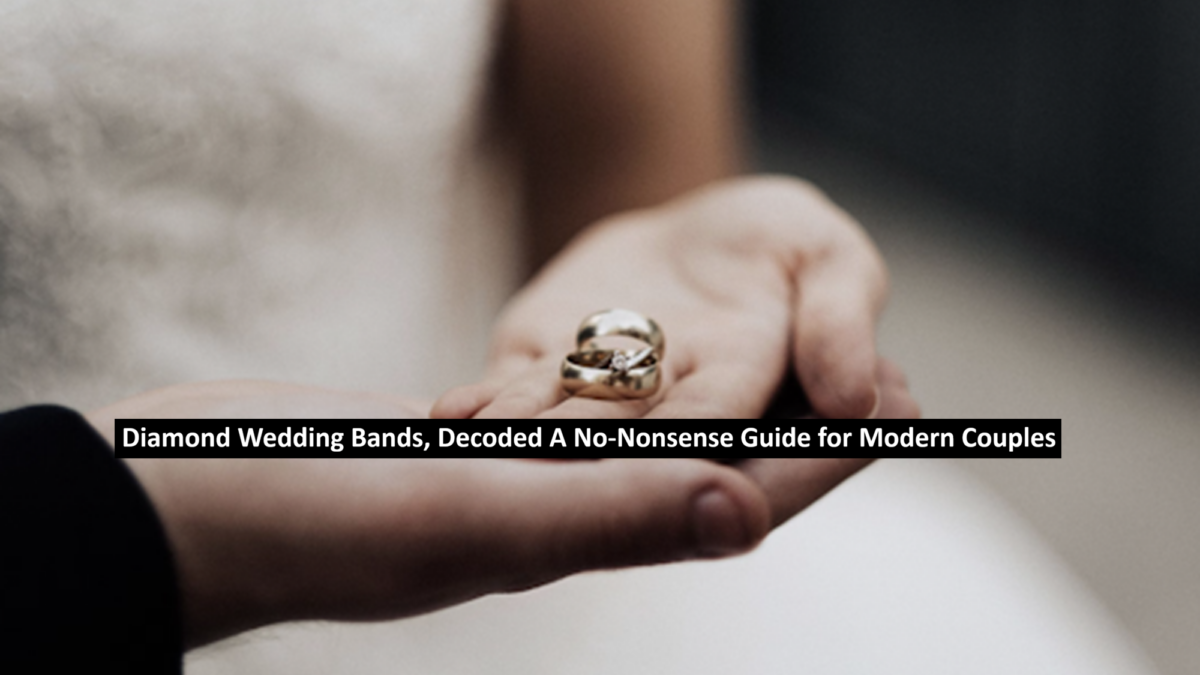
A diamond wedding band is a ring worn to symbolize marriage, featuring diamonds set into the metal – either partially (half-eternity) or fully around the circumference (full-eternity). Unlike an engagement ring, which typically centers on one larger stone, a wedding band uses multiple smaller diamonds arranged in a continuous or semi-continuous pattern, usually worn alongside the engagement ring.
Types of Diamond Wedding Bands
Full-Eternity Bands
Diamonds run the entire circumference of the ring. Maximum sparkle, higher price point, and technically resizable only with difficulty since the diamonds go all the way around.
Half-Eternity Bands
Diamonds cover only the top half (the visible portion when worn). More budget-friendly and easier to resize, without sacrificing much visual impact.
Channel-Set Bands
Diamonds sit between two metal walls with no visible prongs. Sleek, snag-resistant, and ideal for people who wear rings daily while working with their hands.
Pavé Bands
Small diamonds set closely together with tiny metal beads, creating a continuous shimmer effect at a lower cost per carat than larger stones.
2. Choosing a Setting Style
| Setting | Best For | Trade-off |
| Prong | Maximum sparkle | Can snag on fabric |
| Bezel | Active lifestyles, durability | Slightly less light exposure to stones |
| Channel | Daily wear, smooth profile | Harder to clean underneath |
| Pavé | Budget-conscious sparkle | Small stones may loosen over time |
3. Metal Options Compared
- Platinum – Most durable, naturally white, higher price, ideal for daily wear
- White Gold – Similar look to platinum at a lower cost, needs rhodium replating over time
- Yellow Gold – Classic, warm tone, shows diamonds with more contrast
- Rose Gold – Trending choice, complements both natural and lab-grown diamonds
Read: Making Tallow Soap: A Beginner’s Guide to Cold Process Soap
4. Lab-Grown vs. Natural Diamonds
Lab-grown diamonds are chemically, physically, and optically identical to natural diamonds – the difference is origin, not composition. They typically cost significantly less per carat, allowing couples to choose a larger stone or higher clarity grade within the same budget. Pure Jewels specializes in lab-grown diamond jewellery, making this the practical route for couples who want size and clarity without the natural-diamond premium.
5. Sizing and Comfort
- Get sized later in the day when fingers are slightly swollen, for a more accurate fit
- Choose a comfort-fit band (rounded interior) if you wear rings daily
- Confirm your wedding band is contoured to sit flush against your engagement ring before purchase
6. Budget Breakdown: What Actually Drives Cost
Carat size matters less than most buyers assume – cut quality and clarity often account for a larger share of price variation. A well-cut, smaller stone can outsparkle a poorly cut larger one at a lower cost. Ask for the cut grade specifically, not just carat weight.
7. Buying Checklist
- Certification IGI report) provided?
- Metal purity clearly stated (e.g., 18K, platinum 950)?
- Return/resize policy in writing?
- Lab-grown vs. natural clearly disclosed?
- Warranty on setting and stones?
Frequently Asked Questions
Can I wear a diamond wedding band every day?
Yes – channel and bezel settings are specifically designed for daily wear durability.
Is a lab-grown diamond wedding band a good choice?
Yes, for most couples. Lab-grown diamonds offer the same hardness and brilliance as natural diamonds at a lower cost per carat.
How much should a diamond wedding band cost?
Prices vary widely by carat, cut, and metal – cut quality typically has more impact on price and appearance than carat size alone.
Should my wedding band match my engagement ring metal?
It’s not required, but matching metals creates a more cohesive look when worn together.
Author’s Bio:
Pure Jewels is an Indian jewellery brand based in Surat, Gujarat, specialising in lab-grown diamond jewellery. Its catalogue covers engagement and wedding rings, earrings, pendants, bracelets, necklaces and mangalsutra designs.
